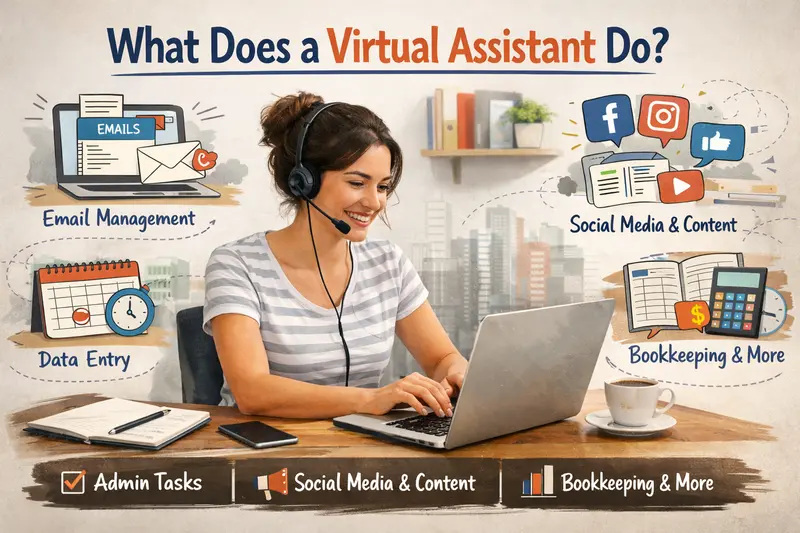

If you’ve been looking into remote jobs, you’ve probably seen virtual assistant jobs pop up everywhere. They’re often described as flexible, beginner-friendly, and work-from-home friendly. But what does a virtual assistant actually do day to day? And is it really a good option if you don’t have a corporate background or tech degree?
I’ve helped friends and family explore virtual assistant work over the years, and I’ve watched people succeed, burn out, undercharge themselves, and sometimes walk away because their expectations didn’t match reality. This article is for anyone who wants a clear, honest breakdown of what virtual assistants do in real life; not just the polished version you see on social media.
Whether you’re a stay-at-home parent, career changer, freelancer, or someone who just wants remote income without jumping into coding or sales, this guide will walk you through what the role really looks like.
What Is a Virtual Assistant?
A virtual assistant (VA) is a remote worker who provides administrative, technical, or creative support to businesses, entrepreneurs, or teams; entirely online.
Instead of working in a physical office, virtual assistants handle tasks remotely using email, chat tools, cloud software, and project management platforms. Some VAs work part-time for one client, while others juggle multiple clients on flexible schedules.
People often assume virtual assistants are “just admins,” but that’s only part of the picture. In real situations, the role can range from basic support tasks to specialized work that pays significantly more.
From what I’ve seen, the biggest misunderstanding is that virtual assistants do everything. In reality, good VAs usually focus on a defined set of tasks, and the clearer the scope, the better the working relationship.
What Does a Virtual Assistant Do Day to Day?
Virtual assistant duties depend heavily on the client, industry, and skill level. Here’s what the work typically looks like in real life.
Common Daily Tasks
Many entry-level and general virtual assistants handle tasks such as:
- Managing email inboxes
- Scheduling appointments and calendar management
- Data entry and updating spreadsheets
- Responding to customer inquiries
- Organizing digital files
- Making travel arrangements
- Creating basic documents or reports
A friend of mine started as a VA for a small online coach. Her mornings were spent sorting emails and booking Zoom calls, while afternoons involved updating Google Sheets and following up with clients. It wasn’t glamorous, but it was steady and predictable.
Specialized Virtual Assistant Work
As virtual assistants gain experience, many move into more specialized roles, such as:
- Social media scheduling and engagement
- Content uploading for blogs or websites
- Customer support ticket management
- CRM system updates
- Bookkeeping using tools like QuickBooks
- Email marketing setup and automation
- Project coordination
Specialization is where virtual assistant work becomes more sustainable long term. I’ve watched people double their hourly rates simply by narrowing their focus instead of trying to do everything.
Who Hires Virtual Assistants?
Virtual assistants are hired by a wide range of clients, including:
- Small business owners
- Online entrepreneurs
- E-commerce store owners
- Coaches and consultants
- Startups and remote teams
- Real estate professionals
- Content creators
Some businesses hire VAs through platforms like Upwork, Fiverr, or OnlineJobs.ph. Others hire directly through referrals, Facebook groups, or job boards.
In real situations, the best clients usually come from referrals or repeat contracts — not mass applications.
Must-Have Skills vs Nice-to-Have Skills
Must-Have Skills for Virtual Assistants
Most clients expect these basics:
- Strong written communication
- Reliable internet connection
- Time management and organization
- Comfort with email and basic software
- Attention to detail
- Ability to follow instructions
People often don’t realize how important communication is. I’ve seen technically capable VAs lose clients simply because they didn’t ask clarifying questions or missed deadlines without explanation.
Nice-to-Have Skills That Increase Pay
These skills aren’t required to start, but they help you grow:
- Social media management
- Graphic design basics
- CRM tools (HubSpot, Salesforce)
- Email marketing platforms
- Customer service experience
- Basic bookkeeping
- Website content management
You don’t need all of these. In fact, trying to learn everything at once is a common beginner mistake.
How Do Beginners Usually Start as Virtual Assistants?
Most successful VAs follow a similar path, even if they don’t realize it at first.
Step 1: Identify Transferable Skills
You don’t need formal VA experience. Skills from previous roles — admin work, customer service, teaching, or even running a household — often translate well.
I once watched a former retail worker land her first VA client simply by highlighting her scheduling, customer communication, and inventory tracking experience.
Step 2: Learn Common Tools
Basic familiarity with tools like Google Workspace, Zoom, Trello, or Slack is often enough to get started. You don’t need to master advanced software upfront.
Step 3: Create a Simple Profile or Resume
Most beginner VAs start with:
- A short skills-focused resume
- A profile on a freelance platform
- A basic introduction explaining what tasks they offer
Perfection isn’t required. Clarity matters more.
Step 4: Apply Selectively
Applying to everything usually leads to burnout. From what I’ve seen, focused applications with clear skills perform much better than mass submissions.
Common Mistakes and Risks to Watch Out For
Virtual assistant work isn’t risk-free, especially at the beginning.
Undervaluing Your Time
Many beginners accept extremely low rates out of fear. While some lower-pay starter jobs exist, staying there too long makes it hard to move up.
Vague Job Descriptions
Jobs that say “do everything” often turn into overwhelming workloads. Clear task lists protect both sides.
Unpaid “Test Tasks”
Small samples are normal. Full unpaid work is a red flag.
Burnout from Too Many Clients
I’ve watched people take on five or six clients at once, thinking more equals better. In reality, fewer high-quality clients usually leads to better income and sanity.
How Much Do Virtual Assistants Earn Realistically?
Earnings vary widely depending on location, experience, and specialization.
- Entry-level VAs often start on the lower end
- Specialized VAs charge higher hourly or monthly rates
- Long-term clients usually pay better than short gigs
There are no guarantees, and anyone promising “easy money” isn’t being honest. Virtual assistant work can become stable, but it takes time, boundaries, and skill development.
Practical Tips From Real Experience
- Start simple and improve as you go
- Track your time early to avoid undercharging
- Communicate clearly and professionally
- Don’t be afraid to say no to tasks outside your agreement
- Keep learning one useful skill at a time
One of the best VAs I know grew her income not by working more hours, but by specializing in one task she enjoyed and doing it well.
Frequently Asked Questions About Virtual Assistant Jobs
What qualifications do you need to be a virtual assistant?
Most virtual assistant jobs don’t require formal degrees or certifications. What clients usually care about is whether you can communicate clearly, meet deadlines, and handle tasks reliably. Many successful VAs come from customer service, admin, teaching, or non-office backgrounds. Transferable skills matter far more than credentials. Some clients may request experience with specific tools, but beginners often learn these on the job. In real situations, showing professionalism and willingness to learn often outweighs formal qualifications.
Is being a virtual assistant good for beginners?
Yes, virtual assistant work is one of the more beginner-friendly remote jobs — but it still requires effort. Beginners often succeed when they start with clear, simple services and realistic expectations. The learning curve is manageable, but consistency matters. I’ve seen beginners struggle when they expect instant income, and succeed when they treat it like building any other skill-based role.
How many hours do virtual assistants usually work?
Virtual assistants can work anywhere from a few hours a week to full-time schedules. Some clients hire VAs for fixed hours, while others offer task-based or flexible arrangements. Many people start part-time and increase hours as they gain confidence. Flexibility is real, but reliability is still expected.
Do virtual assistants need to talk to clients on calls?
It depends on the role. Some VAs mainly communicate via email or chat, while others attend regular Zoom meetings. Entry-level admin roles may involve minimal calls, while project coordination or executive support usually includes more live communication. It’s okay to set preferences early.
Can virtual assistants work for more than one client?
Yes, many VAs work with multiple clients. The key is managing workload and setting clear boundaries. Too many clients can lead to burnout, especially early on. From what I’ve seen, fewer long-term clients often provide more stability than many short gigs.
Is virtual assistant work a long-term career?
It can be, but it evolves. Some VAs remain generalists, while others move into specialized roles like operations management, marketing support, or executive assistance. Others use VA work as a stepping stone into freelancing or remote employment. Long-term success usually comes from specialization and clear positioning.
Is Virtual Assistant Work Right for You?
Virtual assistant jobs aren’t a shortcut to easy money, but they are a realistic entry point into remote work. If you’re organized, communicative, and willing to learn, this role can provide flexibility and growth over time.
I’ve seen people thrive by keeping expectations grounded and focusing on steady progress instead of overnight success. If that sounds like you, virtual assistant work may be worth exploring.