
Preparing for a job interview can feel overwhelming, especially if you’ve already sent out dozens of applications and finally landed a call. I’ve seen people walk into interviews overconfident and unprepared, and I’ve seen others talk themselves out of opportunities because of nerves. The truth sits somewhere in the middle. Interview preparation isn’t about memorizing perfect answers or pretending to be someone you’re not. It’s about reducing uncertainty so you can show up calm, clear, and honest.
This guide is for beginners, career changers, people re-entering the workforce, and even experienced professionals who haven’t interviewed in a while. If you’ve ever thought, “I don’t even know where to start,” you’re in the right place.
What Does “Interview Preparation” Really Mean?
Most people assume interview preparation means practicing answers to common questions. That’s part of it, but it’s only one piece.
Real interview preparation includes:
- Understanding the role and company
- Knowing how your experience fits their needs
- Preparing examples from your real work or life
- Anticipating concerns they may have about your background
- Managing nerves so you don’t freeze or ramble
From what I’ve seen, people often over-prepare scripts and under-prepare understanding. Interviewers can tell when answers are rehearsed versus thought through.
How Job Interviews Work in Real Life
Interviews aren’t exams. They’re conversations with a purpose. Employers are usually trying to answer a few simple questions:
- Can you do the job?
- Will you fit with the team?
- Are you reliable and easy to work with?
- Do your expectations match what we can offer?
I’ve watched a friend lose an opportunity not because he lacked skills, but because he talked like he was desperate to escape his current job. Another did surprisingly well by calmly explaining what she could learn quickly, even though she didn’t meet every requirement.
Different interviews may include:
- Phone or video screening
- One-on-one interviews
- Panel interviews
- Skills or task-based assessments
Each stage builds on the last. Preparation should evolve as you move forward.
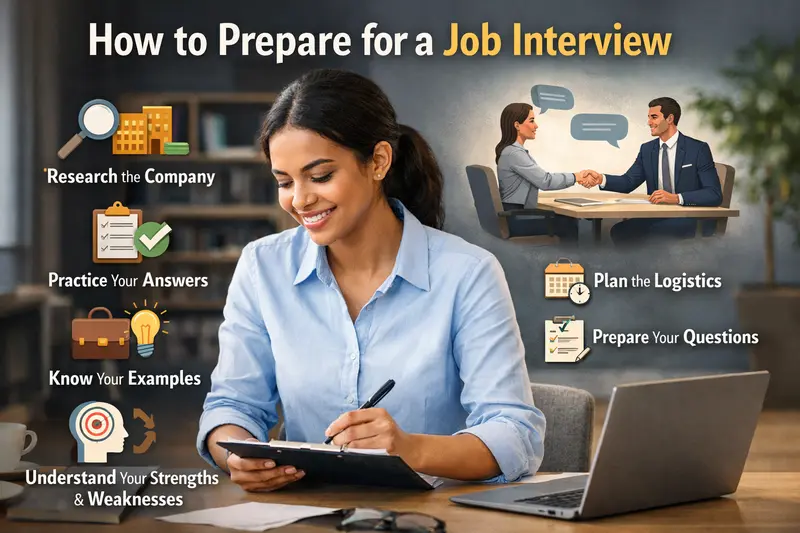
Step One: Research the Job and Company Properly
This is where many candidates cut corners.
At a minimum, you should know:
- What the company does
- Who their customers are
- What the role is responsible for
- How the role fits into the team or business
Don’t just skim the homepage. Read the job description carefully and look for repeated themes. Are they emphasizing communication? Independence? Accuracy? Speed?
One mistake I’ve seen repeatedly is people preparing generic answers that could apply to any job. Interviewers notice that quickly.
Practical tip:
Rewrite the job description in your own words. This forces you to understand what they actually need, not just what sounds impressive.
Step Two: Prepare Your Personal Examples
Most interviews rely heavily on behavioral questions like:
- “Tell me about a time you handled a difficult situation”
- “Describe a challenge you faced at work”
- “How do you prioritize tasks?”
These questions are meant to reveal how you think and act, not to trap you.
Choose 6 to 8 real examples from:
- Past jobs
- School projects
- Volunteer work
- Freelance or personal projects
- Life situations where relevant
People often think their experience isn’t “good enough.” I’ve seen retail workers outperform office professionals in interviews because they explained problem-solving clearly.
Use a simple structure:
- Situation: What was happening?
- Action: What did you do?
- Result: What changed or improved?
Don’t exaggerate. Interviewers can sense it.
Step Three: Understand Your Strengths and Gaps
You don’t need to be perfect. You do need to be self-aware.
Ask yourself:
- What am I genuinely good at?
- Where do I usually struggle?
- What skills am I still developing?
One of the best interviews I’ve ever seen involved a candidate openly acknowledging a weakness and explaining how they were working on it. That honesty built trust.
Avoid saying things like “I have no weaknesses.” It comes across as evasive, not confident.
Skills and Requirements: Must-Haves vs Nice-to-Haves
Must-Have Skills
These are non-negotiables for most roles:
- Basic communication skills
- Reliability and punctuality
- Willingness to learn
- Ability to follow instructions
- Professional behavior
Even technical roles fail candidates who ignore these basics.
Nice-to-Have Skills
These improve your chances but aren’t deal-breakers:
- Advanced tools or software knowledge
- Industry-specific experience
- Leadership or mentoring experience
- Certifications
People often disqualify themselves mentally because they don’t meet every “nice-to-have.” In real situations, employers expect gaps.
How Beginners Usually Start Preparing (A Simple Path)
If you’re early in your career or returning after a break, keep preparation manageable.
- Review the job description line by line
- Match each key requirement with a real example
- Practice explaining your background out loud
- Prepare answers for common questions
- Research the interviewer if possible
- Plan what you’ll wear and how you’ll arrive or log in
I’ve watched beginners overcomplicate things by watching dozens of interview videos. Preparation helps, but too much can increase anxiety.
Common Interview Mistakes and Risks
Talking Too Much
Nerves cause rambling. Practice concise answers.
Memorizing Scripts
Scripts sound robotic and fall apart under follow-up questions.
Badmouthing Past Employers
This is one of the fastest ways to lose trust.
Not Preparing Questions
Not asking questions can signal low interest.
Ignoring Logistics
Late arrivals, tech issues, or poor audio can overshadow good answers.
A cousin of mine once nailed every answer but forgot to test his video call setup. The interview ended early due to connection problems. Preparation includes logistics.
What Are Realistic Expectations?
Interviews don’t always lead to offers, even when you perform well. Sometimes:
- Another candidate had internal experience
- Timing changed
- Budget approvals fell through
Rejection isn’t always about you.
Also, interviews are rarely life-changing overnight. Entry-level roles pay modestly. Career growth often comes later through consistency, not one perfect interview.
Understanding this reduces pressure and helps you perform better.
Practical Interview Tips From Real Experience
- Practice aloud, not silently
- Record yourself once to hear how you sound
- Prepare a short self-introduction
- Bring notes, even for virtual interviews
- Pause before answering questions
- Ask clarifying questions if needed
I’ve seen people think pausing makes them look unprepared. It actually makes you look thoughtful.
Frequently Asked Questions About Job Interview Preparation
How early should I start preparing for an interview?
Ideally, you should start light preparation as soon as you apply. Once you get an interview invitation, spend at least two to three focused sessions reviewing the role, practicing answers, and preparing examples. Cramming the night before increases stress and reduces clarity. Spreading preparation over a few days helps you think more naturally during the interview.
What should I do if I don’t have much experience?
Focus on transferable skills like communication, problem-solving, reliability, and learning ability. Use examples from school, volunteering, part-time work, or life situations. Interviewers know beginners won’t have everything. They’re often more interested in attitude and potential than experience alone.
Is it okay to bring notes to an interview?
Yes, especially for virtual or in-person interviews. A small notebook with key points or questions is acceptable and often seen as preparation, not weakness. Just don’t read directly from it. Use it as a reference, not a script.
How do I calm my nerves before an interview?
Preparation is the biggest confidence booster. Beyond that, arrive early, breathe slowly, and remind yourself that interviews are two-way conversations. I’ve seen people relax once they realize the interviewer is just another human doing their job.
What questions should I ask the interviewer?
Ask about day-to-day responsibilities, team structure, training, success metrics, or growth opportunities. Avoid questions that could be answered easily from the job description. Thoughtful questions show engagement and maturity.
Preparing Without Overthinking……
Preparing for a job interview isn’t about perfection. It’s about clarity. When you understand the role, know your own story, and accept that some things are out of your control, interviews become manageable.
I’ve seen people stumble their way into great careers and others miss opportunities because they tried to sound impressive instead of genuine. Aim for honest, prepared, and calm. That combination goes further than most people realize.