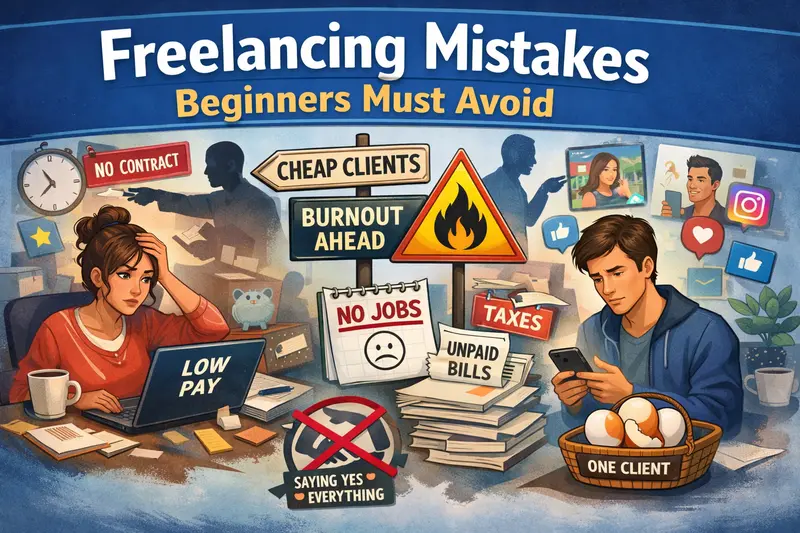

Freelancing attracts a lot of people because it promises flexibility, control, and the chance to work from home on your own terms. This article is for beginners; especially career changers, parents, students, and anyone testing freelancing as a work-from-home idea rather than a full business from day one.
If you’re new, here’s the honest truth: most freelancers don’t fail because they aren’t talented. They fail because they make preventable mistakes early on. I’ve watched friends burn out, underprice themselves, quit too early, or get stuck doing work they hate simply because nobody warned them what freelancing is really like.
This guide isn’t about hype or “six figures from your laptop” It’s about the real mistakes beginners make, why they happen, and how to avoid them so freelancing has a chance to actually work for you.
What Freelancing Really Is (And What It Isn’t)
Freelancing means offering a skill or service independently to clients instead of working as an employee. Common freelance work-from-home ideas include writing, graphic design, video editing, bookkeeping, virtual assistance, social media management, tutoring, and tech-related services.
What people often don’t realize is that freelancing has two jobs built into one:
- Doing the actual work
- Running a mini business (finding clients, setting prices, managing time, handling payments)
Many beginners focus only on the first part and ignore the second. That’s where problems usually start.
From what I’ve seen, freelancing works best when you treat it like a practical income strategy, not a fantasy escape from work.
Mistake #1: Trying to Do Everything for Everyone
One of the fastest ways beginners struggle is by being too broad.
“I’ll do writing, editing, social media, logos, websites; anything!”
This sounds flexible, but it often backfires. Clients want clarity. If they don’t immediately understand what problem you solve, they move on.
I watched a buddy bounce between five different services for months. He stayed busy but never built momentum because no one knew what he actually specialized in.
How to avoid it:
- Pick one main service to lead with
- Aim for a clear outcome (not just a skill)
- You can expand later once income is stable
Being focused doesn’t limit you; it helps clients trust you faster.
Mistake #2: Underpricing Out of Fear
Almost every beginner undercharges. Some do it to “gain experience” Others are scared no one will hire them otherwise.
The problem is that low prices attract the hardest clients. These clients often:
- Demand more than agreed
- Disrespect boundaries
- Leave poor feedback
- Delay payments
I’ve seen freelancers work 40–50 hours a week and still panic over bills because they priced themselves too low to recover.
Better approach:
- Research realistic beginner rates in your field
- Price for sustainability, not desperation
- Raise rates gradually as confidence and results grow
You don’t need to be the cheapest option to get hired. You need to be clear and reliable.
Mistake #3: Saying Yes to Bad Clients Early On
When you’re new, it’s tempting to accept any client. Bills don’t wait, and rejection stings.
But bad clients can cost more than they pay.
Common red flags include:
- Vague instructions
- Constant scope changes
- Unrealistic deadlines
- Disrespectful communication
- Hesitation to sign agreements or pay deposits
I’ve watched beginners lose weeks of time chasing unpaid invoices because they were afraid to say no.
Protect yourself by:
- Using written agreements, even simple ones
- Asking clear questions before starting
- Trusting your gut if something feels off
One good client is worth more than three stressful ones.
Mistake #4: Skipping Contracts and Clear Terms
Many beginners assume contracts are only for “serious” freelancers. That’s a costly misunderstanding.
A contract doesn’t have to be complicated. It simply defines:
- Scope of work
- Payment amount and timing
- Revision limits
- Deadlines
- Ownership rights
Without clarity, misunderstandings are almost guaranteed.
I’ve seen friendships strained and work relationships ruined because expectations were never written down.
Start simple:
- Use basic freelance agreement templates
- Confirm everything in writing
- Never rely solely on verbal promises
Contracts protect both sides and make you look professional.
Mistake #5: Treating Freelancing Like Quick Cash
Freelancing isn’t instant income for most people. Beginners who expect fast results often quit too soon.
In real situations, the first few months can feel slow:
- Applications with no replies
- Low confidence
- Learning how clients actually think
- Figuring out your workflow
I’ve watched capable people give up just before things started clicking.
What helps:
- Setting realistic timelines (3–6 months to stabilize)
- Tracking progress beyond money
- Treating early stages as skill-building
Freelancing rewards consistency, not urgency.
Mistake #6: Ignoring Time Management and Burnout
Working from home sounds flexible until work spills into everything.
Beginners often:
- Work late every night
- Skip breaks
- Say yes to impossible deadlines
- Feel guilty for resting
This leads to burnout fast.
I’ve seen parents especially struggle here; trying to juggle family and freelancing without boundaries.
Healthier habits include:
- Setting work hours (even if flexible)
- Scheduling admin time
- Taking days off intentionally
- Building buffer time into deadlines
Your energy is part of your business.
Mistake #7: Not Tracking Income, Expenses, or Taxes
This one sneaks up on people.
Freelancers forget that:
- Income isn’t guaranteed
- Taxes aren’t automatically withheld
- Expenses add up quietly
I’ve seen beginners panic at tax time because they never planned for it.
Simple steps that help:
- Track income monthly
- Save a portion for taxes
- Separate personal and freelance money
- Keep basic records from day one
You don’t need to be an accountant; you just need awareness.
Mistake #8: Comparing Yourself to Established Freelancers
Social media makes freelancing look easy. What you don’t see are the years of trial and error behind the success stories.
Comparing your first month to someone else’s fifth year is unfair and discouraging.
I’ve seen talented beginners doubt themselves simply because progress looked “slow.”
Instead:
- Compare yourself to last month
- Measure skills gained, not just money
- Remember everyone starts unseen
Growth in freelancing is rarely linear.
Mistake #9: Relying on One Client or Platform
Landing your first steady client feels amazing; but relying on just one can be risky.
Clients leave. Budgets change. Platforms adjust rules.
I’ve watched freelancers lose their only income overnight because they didn’t diversify.
Safer approach:
- Aim for multiple clients over time
- Build direct relationships when possible
- Keep learning new skills
Stability comes from variety.
Mistake #10: Quitting Too Early (Or Staying Too Long)
Some beginners quit at the first sign of struggle. Others stay stuck in low-paying, stressful setups for years.
Both are mistakes.
Healthy freelancing decisions require:
- Regular self-check-ins
- Clear income goals
- Willingness to adjust strategy
- Knowing when to pivot or pause
Freelancing should support your life; not trap you.
Frequently Asked Questions
Is freelancing realistic for beginners with no experience?
Yes, but expectations matter. Beginners usually start with transferable skills; communication, organization, writing, customer service, or technical basics. The key is positioning yourself as someone who solves a specific problem, even at an entry level. Early projects may pay modestly, but they build confidence and proof. What matters most is consistency and learning, not perfection.
How long does it take to make stable income freelancing?
For most beginners, it takes several months to become consistent. Some see income in weeks; others need six months or more. It depends on skill demand, time invested, pricing, and persistence. Freelancing is rarely instant, but it becomes more predictable as systems and relationships develop.
Should beginners freelance part-time or full-time?
Part-time is safer for most people starting out. It reduces pressure and allows room to learn. I’ve seen beginners succeed more often when they build freelancing alongside another income source before fully committing.
What’s the biggest mistake new freelancers regret?
Underpricing and ignoring boundaries. Many wish they had valued their time earlier and learned to say no sooner. These two mistakes cause the most stress and burnout.
Can freelancing work long-term or is it temporary?
It can be long-term if managed well. Some freelancers grow into agencies, consultants, or specialized experts. Others use it as a flexible income phase. Both are valid paths; it depends on personal goals.
Honest Conclusion….. Freelancing Isn’t Easy, But It Can Be Worth It
Freelancing from home isn’t a shortcut; it’s a learning curve. Beginners who succeed usually aren’t the smartest or most talented. They’re the ones who avoid common mistakes, stay patient, and adapt as they go.
From what I’ve seen, freelancing works best when you treat it with respect and realism. If you go in informed, protect your time, and learn from early missteps, freelancing can become a reliable and flexible work-from-home option—not overnight, but steadily.