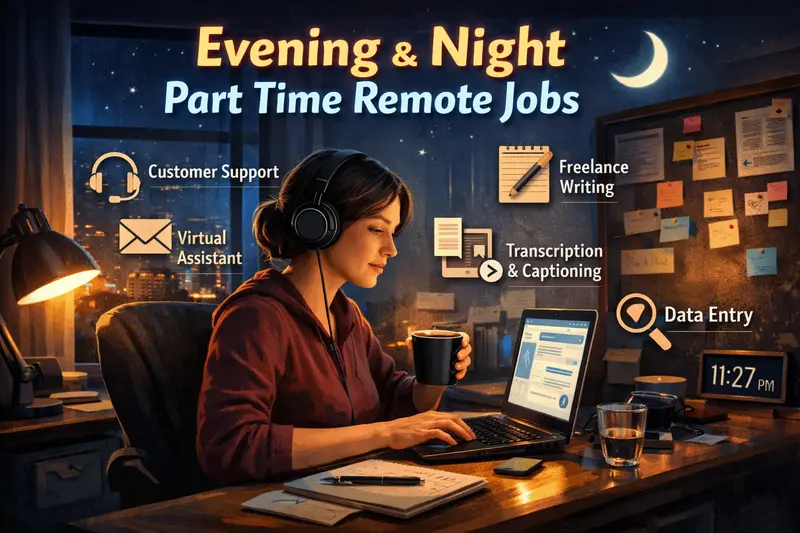

Working from home sounds ideal until you realize most remote jobs still expect you to be online from 9 to 5. That’s where evening and night part time remote jobs come in. These roles are built for people who need flexibility outside normal business hours; parents managing daytime responsibilities, students attending classes, full-time workers looking for extra income, or night owls who simply do better after sunset.
From what I’ve seen helping friends and family, this category is often misunderstood. People assume night work automatically means low pay, scams, or exhausting schedules. In real situations, that’s not always true. There are legitimate part time remote jobs that operate in the evenings and overnight; but they come with trade-offs, expectations, and learning curves that aren’t talked about enough.
This guide breaks down what evening and night remote jobs actually look like, the types of roles available, how people realistically get started, and what to watch out for. No hype, no guarantees; just practical information so you can decide if this path fits your life.
What Are Evening and Night Part Time Remote Jobs?
Evening and night part time remote jobs are work-from-home roles where most or all shifts happen outside standard daytime hours. Typically, this means:
- Evening shifts starting between 5 PM and 8 PM
- Overnight shifts running late night to early morning
- Flexible task-based work completed anytime after business hours
These jobs exist because businesses operate globally, customers need 24/7 support, and digital platforms never really sleep. Companies serving international clients often need workers online while their customers are awake; even if it’s nighttime where you live.
People often don’t realize that many of these roles aren’t “night jobs” by design. They’re normal remote jobs where you choose evening availability or are hired specifically for off-hour coverage.
What Evening and Night Remote Work Looks Like Day to Day
The daily reality depends heavily on the role. Some jobs are structured with scheduled shifts, while others let you work whenever you want as long as tasks are completed.
For example, a remote customer support agent might log in from 7 PM to 11 PM answering tickets or chats. A freelance transcriptionist might work from 9 PM to 1 AM while the house is quiet. A virtual assistant could schedule email management and admin tasks after their client’s business closes.
I’ve watched a buddy try overnight chat support thinking it would be “easy money.” He quickly learned that quiet hours don’t mean no work; they mean unpredictable bursts of activity. Some nights were calm, others nonstop.
Here’s the key reality: night work can be quieter, but it often requires strong self-discipline and alertness when your body wants rest.
Common Types of Evening and Night Part Time Remote Jobs
Below are some of the most realistic and commonly available options.
Customer Support (Chat, Email, Phone)
Many companies need after-hours support. Chat and email roles are especially popular at night since they’re less disruptive than phone calls.
Virtual Assistant (Evening Availability)
Some business owners prefer assistants who handle inboxes, scheduling, or data cleanup after hours so everything is ready by morning.
Online Moderation and Community Support
Forums, social platforms, and membership sites need moderation during late hours to handle reports, comments, and spam.
Transcription and Captioning
Audio transcription, captioning, and subtitle work can often be done anytime, making it popular for late-night workers.
Data Entry and Quality Checking
While not always high-paying, some data-related tasks are available during off-hours with minimal interaction.
Freelance Writing and Editing
Deadlines don’t always care about the clock. Many writers work nights to balance other commitments.
Must-Have Skills vs Nice-to-Have Skills
Must-Have Skills
- Reliable internet connection
- Basic computer literacy
- Ability to stay focused late in the day
- Clear written communication
- Time management and self-discipline
Nice-to-Have Skills
- Previous remote work experience
- Fast typing speed
- Customer service background
- Familiarity with tools like Slack, Zoom, or ticketing systems
- Ability to work independently without supervision
I’ve seen people underestimate how important communication is at night. Fewer managers are online, so you need to handle issues calmly and document your work clearly.
How Beginners Usually Get Started (Step by Step)
Step 1: Identify Your Available Hours
Be honest. Can you work two evenings a week? Every night? Only weekends? Night jobs punish overcommitment.
Step 2: Choose One Role to Focus On
Trying to apply for everything leads to burnout. Pick one job type and tailor your applications.
Step 3: Build a Simple Resume for Remote Work
Highlight reliability, availability, and communication skills. Evening availability is often a selling point.
Step 4: Apply on Legitimate Platforms
Stick to well-known job boards and company career pages. Avoid listings that promise unrealistic income.
Step 5: Start Small and Adjust
Many people begin with short shifts or task-based work and scale up once they know what they can handle.
I watched a family member try to juggle overnight work and early mornings. It didn’t last. They succeeded only after cutting hours in half and protecting sleep.
Common Mistakes and Risks to Watch Out For
Overworking and Sleep Deprivation
This is the biggest risk. Night work without boundaries can wreck your health fast.
Accepting Low Pay “Just to Get Started”
Some entry-level roles pay modestly, but staying too long without growth keeps you stuck.
Falling for Scams
Jobs that require upfront fees or promise easy money are red flags.
Ignoring Time Zone Expectations
Some roles say “flexible” but still expect overlap with specific hours.
Underestimating Loneliness
Working nights can feel isolating. Not everyone talks about this, but it matters.
Realistic Expectations Around Pay and Stability
Pay varies widely based on role, experience, and location. Entry-level evening remote jobs often pay modest hourly rates. Skilled roles like writing, tech support, or specialized admin work may pay more.
What matters more than the number is sustainability. A job that pays less but fits your life can outperform higher pay that causes burnout.
Night shifts can sometimes come with slightly higher rates, but that’s not guaranteed. Expect consistency before expecting growth.
Practical Tips From Real Experience
- Protect your sleep like it’s part of the job
- Use a dedicated workspace, even at night
- Eat light meals to avoid fatigue
- Keep a consistent schedule when possible
- Communicate availability clearly to employers
People often don’t realize how powerful routine is for night work. Once you find a rhythm, everything feels easier.
Frequently Asked Questions
Are evening and night remote jobs legitimate?
Yes, many are legitimate, especially in customer support, moderation, and freelance work. The key is applying through trusted platforms and avoiding listings that promise fast money with little effort.
Do night remote jobs pay more than daytime jobs?
Sometimes, but not always. Some companies offer shift differentials, while others pay the same regardless of hours. Pay depends more on skill level than time of day.
Can beginners get night remote jobs with no experience?
Yes. Many entry-level support, transcription, and moderation roles accept beginners. Strong communication and reliability matter more than experience.
Are these jobs suitable for parents?
They can be, but only with realistic scheduling. Many parents succeed by working short evening shifts rather than overnight hours.
How many hours should I work at night?
Most people do best with 10 to 25 hours per week. More than that often leads to burnout unless sleep is carefully managed.
Is Night Remote Work Right for You?
Evening and night part time remote jobs can be a lifeline for people who don’t fit traditional schedules. They’re not easy money, and they’re not for everyone; but they are real.
I’ve seen people thrive once they stop chasing every opportunity and focus on what fits their energy, health, and responsibilities. If you approach this with honesty, patience, and boundaries, night remote work can become a sustainable part of your income; not a temporary struggle.