
Interviews are one of those experiences almost everyone dreads, no matter how qualified they are. I’ve watched smart, capable people freeze up simply because they didn’t know what to expect. Others prepared for days but focused on the wrong things. This guide is for anyone who wants to walk into an interview feeling calmer, more prepared, and less caught off guard.
If you’re a fresh graduate, a career changer, returning to work after a break, or someone who’s had a few interviews that didn’t go as planned, this article is for you. We’ll break down the most common interview questions, why employers ask them, and how to answer in a way that feels honest and natural, not scripted or fake.
I’ve helped friends practice answers at kitchen tables, listened to family members replay interviews they thought they “messed up,” and sat through interviews myself where a single question made all the difference. From what I’ve seen, it’s rarely about having the “perfect” answer. It’s about understanding what the interviewer is really listening for.
What Are Interviewers Really Looking For?
Before jumping into questions and answers, it helps to understand the bigger picture. Interviewers usually aren’t trying to trick you. Most are trying to figure out three things:
- Can you actually do the job?
- Will you be easy enough to work with?
- Are you genuinely interested in this role, not just any role?
People often overthink answers because they assume there’s a secret formula. In real situations, interviewers care more about clarity, honesty, and self-awareness than fancy wording.
One hiring manager I know once told me, “I can teach skills. I can’t teach attitude or self-awareness.” That perspective shows up in many of the questions below.
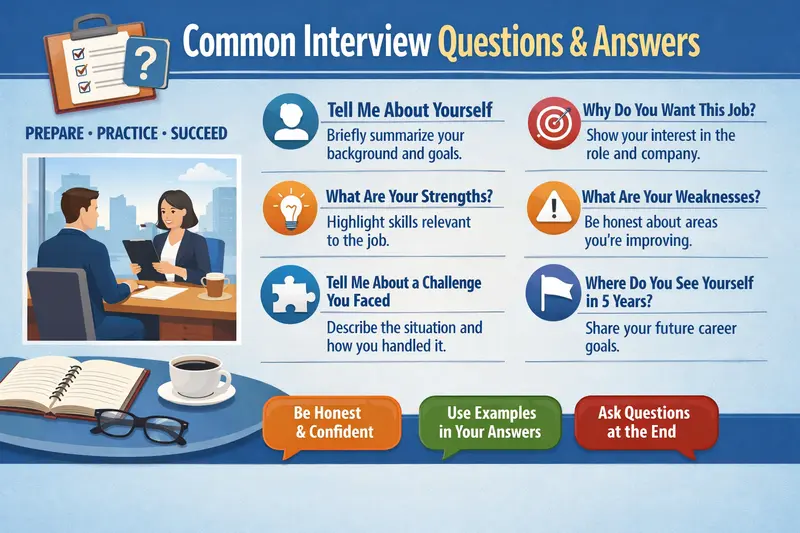
Tell Me About Yourself
Why this question is asked
This is almost always the opening question, and it sets the tone. Interviewers want a quick summary of who you are professionally and how you arrived at this point.
How to answer it
Focus on your work story, not your life story. A simple structure works well:
- Where you are now (or your most recent role)
- How you got there
- Why you’re interested in this opportunity
Example answer:
“I’m currently working as a customer support representative, where I’ve spent the last two years helping customers resolve account issues and improve their experience. Before that, I studied business administration and worked part-time in retail, which helped me build strong communication skills. I’m now looking to move into a role where I can take on more responsibility and contribute to a growing team, which is what attracted me to this position.”
I’ve seen people panic here and ramble for five minutes. Keep it under a minute if possible. Think of it as your professional highlight reel.
Why Do You Want This Job?
Why this question is asked
This checks motivation and effort. Employers want to know you didn’t just click “apply” randomly.
How to answer it
Tie together the role, the company, and your own goals. Avoid answers that focus only on money or convenience.
Example answer:
“I’m interested in this role because it combines my experience in data analysis with my interest in problem-solving. I’ve followed your company for a while and like how you focus on long-term solutions rather than quick fixes. It feels like a place where I could grow while adding real value.”
I’ve watched a buddy lose out on a role because he said, “I just need a job right now.” Honest? Yes. Helpful? Not really. You can be truthful and thoughtful.
What Are Your Strengths?
Why this question is asked
Interviewers want to know what you’re confident about and how self-aware you are.
How to answer it
Choose strengths that are relevant to the job and back them up with examples.
Example answer:
“One of my strengths is staying organized under pressure. In my last role, I handled multiple deadlines at once by breaking tasks into smaller steps and prioritizing daily. It helped me consistently meet deadlines without burning out.”
Avoid listing vague traits like “hardworking” without context. Everyone says that.
What Are Your Weaknesses?
Why this question is asked
This isn’t about exposing flaws. It’s about honesty and growth.
How to answer it
Pick a real but manageable weakness and explain how you’re working on it.
Example answer:
“I used to struggle with delegating tasks because I wanted everything done perfectly. Over time, I realized this slowed the team down. I’ve been working on trusting others more and giving clearer instructions, which has made collaboration smoother.”
I’ve seen people sabotage themselves by saying things like “I’m a perfectionist” without explanation. That answer has become a red flag for many interviewers.
Tell Me About a Challenge You Faced at Work
Why this question is asked
This tests problem-solving, resilience, and communication.
How to answer it
Use a simple structure:
- Situation
- Task
- Action
- Result
Example answer:
“In a previous role, our team faced a sudden increase in customer complaints after a system update. My task was to help reduce response times. I created a shared document with common issues and solutions, which helped the team respond faster. Within two weeks, complaints dropped noticeably.”
From what I’ve seen, interviewers care more about how you handled the situation than whether the outcome was perfect.
How Do You Handle Stress or Pressure?
Why this question is asked
Almost every job has stressful moments. Employers want to know you won’t shut down or lash out.
How to answer it
Show that you recognize stress and manage it constructively.
Example answer:
“When things get busy, I focus on prioritizing tasks and taking short breaks to reset. I’ve learned that stepping back briefly helps me stay focused and avoid mistakes.”
In real situations, people who claim they “never get stressed” often come across as unrealistic.
Where Do You See Yourself in Five Years?
Why this question is asked
This checks ambition and alignment, not whether you have a detailed life plan.
How to answer it
Keep it flexible and connected to growth.
Example answer:
“In five years, I’d like to be more experienced in this field and taking on greater responsibility, possibly mentoring others. I’m focused on building strong skills now and seeing where that leads.”
I’ve watched candidates overthink this and panic. Employers don’t expect certainty, just direction.
Why Should We Hire You?
Why this question is asked
This is your chance to summarize your value.
How to answer it
Connect your skills, experience, and attitude to the role.
Example answer:
“I bring a combination of relevant experience, a strong work ethic, and a willingness to learn. I take feedback seriously and focus on continuous improvement, which I think fits well with your team’s approach.”
Think of this as answering, “What problem do you solve for us?”
How Beginners Should Prepare Step by Step
For people early in their careers, preparation makes a huge difference. Here’s a realistic approach I’ve seen work well:
- Read the job description carefully and highlight key skills
- Prepare 6–8 stories from past experiences that show those skills
- Practice answering questions out loud, not just in your head
- Research the company basics, not every detail
- Prepare two thoughtful questions to ask at the end
I’ve watched family members improve dramatically just by practicing answers aloud. It feels awkward, but it works.
Common Interview Mistakes to Avoid
Some mistakes come up again and again:
- Talking too much without answering the question
- Giving overly rehearsed, robotic answers
- Criticizing past employers
- Not asking any questions at the end
- Underselling yourself out of nervousness
One friend admitted he thought humility meant downplaying achievements. In interviews, that often backfires.
Realistic Expectations About Interviews
Even with perfect preparation, interviews are unpredictable. Sometimes you’re a great candidate, but someone else is just a slightly better fit. Rejections don’t always reflect your ability.
From what I’ve seen, people who treat interviews as learning experiences improve much faster. Every interview teaches you something about how you communicate under pressure.
Practical Interview Tips From Real Experience
- Pause before answering. Silence is okay.
- If you don’t understand a question, ask for clarification.
- Bring examples for everything you claim.
- It’s okay to admit you’re nervous. It often humanizes you.
- Follow up with a short thank-you message if appropriate.
I’ve seen interviews turn around simply because the candidate stayed calm and genuine.
Frequently Asked Questions
What are the most common interview questions?
The most common interview questions usually include “Tell me about yourself,” “Why do you want this job?”, “What are your strengths and weaknesses?”, and behavioral questions about challenges or teamwork. These questions appear across industries because they help employers understand your experience, mindset, and communication style. Preparing for these core questions gives you a solid foundation, even if the interview includes role-specific topics. It’s better to prepare flexible answers that can be adapted rather than memorizing scripts word for word.
How long should my interview answers be?
Most interview answers should be between 30 seconds and two minutes. Short answers can seem unprepared, while long answers may lose the interviewer’s attention. A good rule is to answer the question directly, provide one clear example, and stop. If the interviewer wants more detail, they’ll ask. Practicing out loud helps you find a natural length without rambling.
Is it okay to say “I don’t know” in an interview?
Yes, as long as you handle it thoughtfully. If you truly don’t know something, it’s better to admit it than guess. You can follow up by explaining how you would find the answer or learn the skill. This shows honesty and problem-solving ability. In many real situations, interviewers respect candidates who are transparent and willing to learn.
How do I answer interview questions with no experience?
Focus on transferable skills from school, volunteering, internships, or personal projects. Teamwork, time management, communication, and problem-solving all count. Explain what you learned and how it applies to the role. I’ve seen candidates with little formal experience perform well by clearly connecting their past activities to the job requirements.
What should I ask at the end of an interview?
Good questions show interest and thoughtfulness. You can ask about team structure, success in the role, training, or next steps. Avoid questions that are easily answered on the company website. Asking questions also helps you decide if the role is right for you, not just the other way around.
My Honest Conclusion………….
Interviews are uncomfortable for almost everyone. Even confident professionals feel nervous walking into a room where they’re being evaluated. The goal isn’t to deliver perfect answers, but to communicate clearly, honestly, and thoughtfully.
From what I’ve seen, the people who do best aren’t the ones with the flashiest resumes. They’re the ones who prepare realistically, understand their own experiences, and don’t try to be someone they’re not. Treat interviews as conversations, not interrogations. With practice, they get easier.