
Finding better job opportunities isn’t just about having a degree or years of experience anymore. In real situations, I’ve seen people with impressive resumes struggle because their skills didn’t line up with what employers actually needed. At the same time, I’ve watched others completely change their career direction by learning just a few practical, in-demand skills.
This guide is for anyone who feels stuck, underpaid, or worried about job security. Maybe you’re a recent graduate unsure where to focus. Maybe you’re a parent returning to work. Or maybe you’ve been in the same role for years and sense the ground shifting beneath you. The good news is that skills can be learned at almost any stage of life. The tricky part is choosing the right ones.
Below, I’ll walk through the most valuable skills to learn today, why they matter in real workplaces, and how people actually use them to get better job opportunities. No hype, no guarantees; just practical insight from what I’ve seen people succeed (and fail) with.
What Employers Really Mean When They Say “Skills”
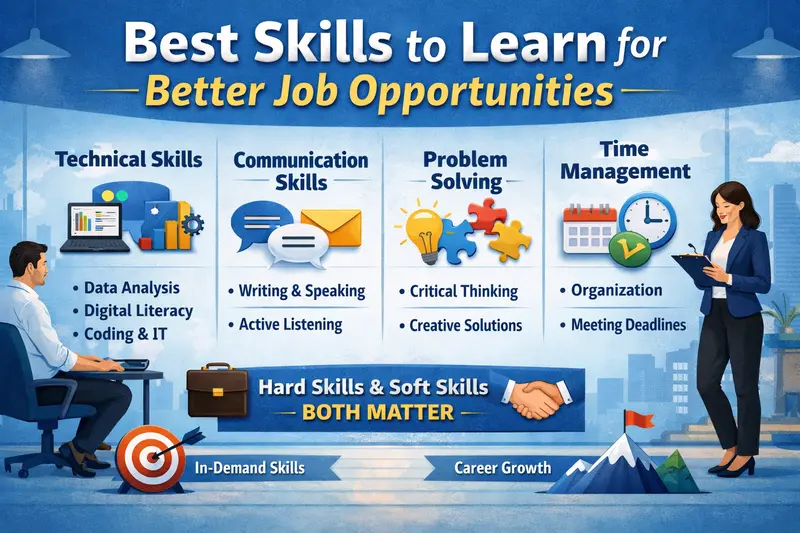
When employers talk about skills, they usually mean more than technical ability. They’re looking for a mix of hard skills (specific, teachable abilities) and soft skills (how you work, communicate, and adapt).
In many hiring processes, technical skills get you shortlisted, but soft skills often decide who gets hired or promoted. I’ve sat in on hiring conversations where two candidates were equally qualified on paper, and the decision came down to who communicated better or seemed easier to train.
The strongest job candidates today usually show:
- One or two solid technical skills
- Several reliable workplace skills
- A willingness to keep learning
High-Value Technical Skills That Open Doors
Digital and Computer Literacy (Non-Negotiable Now)
Basic digital skills are no longer optional. This goes beyond knowing how to browse the internet.
Employers expect comfort with:
- Email and calendar management
- File organization and cloud tools
- Word processing and spreadsheets
In real workplaces, tools like Microsoft Word, Excel, and Google Docs are everywhere. I’ve watched capable workers get passed over simply because they struggled with spreadsheets or formatting documents efficiently.
You don’t need to be an expert, but confidence with everyday digital tools is essential.
Data and Analytical Skills
Data skills aren’t just for analysts or programmers. Many roles now involve interpreting numbers, trends, or reports.
Useful entry-level data skills include:
- Reading charts and dashboards
- Basic spreadsheet formulas
- Understanding simple metrics and KPIs
Even basic Excel or Google Sheets skills can make you stand out. A friend of mine moved from admin work into a better-paying operations role largely because she could organize and analyze data clearly when others couldn’t.
Communication Skills (Written and Verbal)
Communication is one of the most transferable skills across industries. It sounds obvious, but many people underestimate how much it affects hiring decisions.
Strong communication includes:
- Writing clear, professional emails
- Explaining ideas without jargon
- Listening and responding thoughtfully
In remote and hybrid jobs, written communication is especially important. Managers often notice who can explain problems clearly without back-and-forth confusion.
Technical Specializations Worth Considering
Depending on your interests, these skills often lead to stronger job prospects:
- Digital marketing (SEO, content, ads)
- IT support and troubleshooting
- Web design or no-code tools
- Accounting and bookkeeping software
- Project management tools
You don’t need to master everything. One focused skill, paired with reliability, often beats shallow knowledge of many tools.
Soft Skills That Employers Quietly Value Most
Problem-Solving and Critical Thinking
People often don’t realize how much employers value problem-solvers until they’re inside a workplace. Managers want employees who can think through issues instead of escalating every small problem.
Problem-solving shows up as:
- Asking good questions
- Identifying root causes
- Suggesting realistic solutions
I’ve watched average performers become indispensable simply because they handled problems calmly and logically.
Adaptability and Learning Mindset
Industries change. Software updates. Processes evolve. Employees who resist change tend to fall behind.
Adaptability means:
- Learning new tools without complaint
- Adjusting to feedback
- Staying flexible when roles shift
In real situations, employers often promote adaptable workers faster than technically stronger but rigid ones.
Time Management and Self-Discipline
This skill matters even more in remote and hybrid work.
Employers value people who:
- Meet deadlines without reminders
- Prioritize tasks effectively
- Manage distractions
I’ve seen talented people lose remote jobs simply because they struggled with structure and consistency.
Skills That Help Beginners Get Hired Faster
If you’re starting from scratch or changing careers, focus on skills that are:
- Learnable within months
- Widely applicable
- Easy to demonstrate
A practical beginner path often looks like this:
- Build basic digital and communication skills
- Choose one technical or role-specific skill
- Practice with real-world examples
- Apply for entry-level or transitional roles
People often make the mistake of trying to learn everything at once. In my experience, slow and focused progress works better.
Common Mistakes People Make When Learning New Skills
Chasing Trends Without Context
Not every “hot skill” fits every person. I’ve watched people invest months into learning something trendy only to realize they hated the work.
Before committing, ask:
- Do I enjoy this type of work?
- Are there entry-level roles available?
- Can I realistically practice this skill?
Overlearning Without Applying
Courses don’t equal competence. Employers care about what you can do.
A mistake I see often is people collecting certificates but never building projects or examples. Even simple practice work can make a huge difference in interviews.
Ignoring Soft Skills
Some people focus so much on technical learning that they forget communication, teamwork, and professionalism. This can quietly hold careers back.
Realistic Expectations About Skills and Pay
Learning new skills improves opportunities, but it doesn’t guarantee immediate high pay. In real life:
- Entry-level roles may still pay modestly
- Skill value grows with experience
- Job changes often bring gradual income growth
I’ve watched people double their income over several years by stacking skills slowly—not overnight success stories, but steady progress.
Practical Tips From Real Experience
From what I’ve seen:
- One strong skill beats five weak ones
- Consistency matters more than intensity
- Practice in small, realistic ways
- Learn how employers actually use the skill
A colleague once told me, “I stopped asking what skill pays the most and started asking what problem I can help solve.” That shift made a noticeable difference in their job search.
Frequently Asked Questions
What skills are most in demand across industries?
Across many industries, communication, digital literacy, problem-solving, and adaptability consistently show up as in-demand skills. Technical skills vary by role, but employers often prioritize people who can learn, communicate, and work independently. Even in technical fields, soft skills often influence promotions and job stability.
Are technical skills more important than soft skills?
They serve different purposes. Technical skills often help you get interviews, while soft skills help you get hired and promoted. In many real workplaces, technical gaps can be trained, but poor communication or attitude is harder to fix. The strongest candidates usually develop both.
How long does it take to learn a useful job skill?
It depends on the skill and your starting point. Many practical skills can be learned at a basic level within three to six months with consistent practice. Mastery takes longer, but employability often comes before mastery. Employers expect learning to continue on the job.
Is it too late to learn new skills after 30 or 40?
No. I’ve watched career changers in their 30s, 40s, and even 50s successfully pivot by learning relevant skills. What matters more than age is commitment, consistency, and choosing realistic roles where your experience still adds value.
Should I focus on one skill or multiple skills?
Start with one core skill and build supporting skills around it. For example, pairing a technical skill with communication or project management often increases job options. Spreading yourself too thin early can slow progress.
Honest Conclusion…….
Better job opportunities usually come from better alignment; not just harder work. Skills act as bridges between where you are and where you want to go. In real life, I’ve seen people change careers, earn more stability, and gain confidence simply by choosing practical skills and sticking with them.
There’s no perfect skill that guarantees success. But learning skills that solve real problems, combined with patience and consistency, gives you far more control over your career than waiting for the “right opportunity” to appear.