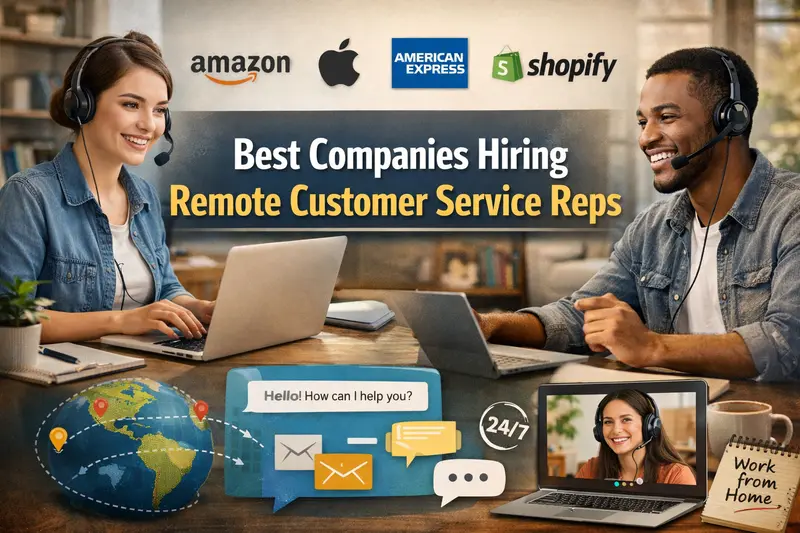

If you’re reading this, you’re probably thinking about starting a remote customer service career; and for good reason. Remote customer support jobs are among the most accessible entry points into the remote work world. They typically don’t require advanced degrees, and with good communication skills and a reliable setup, you can start earning from home sooner than you might expect.
Over the past few years, I’ve seen a wide range of people; recent grads, parents juggling schedules, career changers from retail or hospitality; successfully transition into remote customer support roles. Some started with part-time gigs while finishing school; others replaced full-time retail income with remote wages. That real-world experience is what I hope you’ll get out of this article: not just a list of companies, but a grounded look at where hiring actually happens and how to approach it.
In this guide, we’ll:
- Highlight top companies regularly hiring remote customer service reps
- Dive into what they typically look for
- Share real examples of what the work feels like day-to-day
- Help you realistically plan your job search
Let’s get into it.
What Remote Customer Service Jobs Are All About
Remote customer service; also called remote customer support, virtual customer care, or customer experience roles; means helping customers by phone, chat, email, or social media from your own computer. You’re the human voice or text behind issues like:
- Tracking an order
- Fixing an account problem
- Answering product questions
- Managing returns or escalations
It’s not a niche job any more; nearly every business with online sales needs support staff. In real conversations with people who’ve started in this field, a common theme pops up: empathy matters more than fancy tech skills. Good listening, clear writing, patience, and problem-solving will take you far.
Some roles are reactive (responding to inbound inquiries), others blend proactive outreach (checking in with customers). You might work standard business hours or have evening/weekend shifts depending on the employer.
How Remote Customer Support Works in Real Life
Picture this: it’s 9:00 a.m., you log into the customer support platform from your home desk. You’ve got:
- Headset or good speakers
- Reliable internet
- Ticketing/chat software and company knowledge base
The day might look like:
- 15 minutes of daily check-ins with your team
- A queue of chats or emails waiting
- Short calls with customers needing detailed help
- Logging solutions and notes in systems
- A quick 10-minute break between busy stretches
In quieter moments, you might update your knowledge base or share patterns you’re seeing with the team. One friend of mine, who switched from in-store sales to remote support, told me it felt more collaborative than she expected — teams solve tricky cases together, especially in tech and software support.
Some companies are “fully remote” with no office; others are “remote-friendly” and hire for remote roles but also have headquarters.
What Employers Typically Look For
Most remote customer service jobs ask for:
Must-Have Skills
- Clear communication (speaking and writing)
- Basic technology comfort — email, web tools, CRM platforms
- Patience with frustrated customers
- Reliable internet and quiet workspace
Nice-to-Have
- Previous customer service experience
- Typing speed and multi-chat comfort
- Second language skills (like Spanish, French)
- Familiarity with specific tools (Zendesk, Salesforce, Intercom)
From what I’ve seen, soft skills outweigh hard skills for entry-level roles. A strong attitude and willingness to learn are often what get you hired.
Best Companies Hiring Remote Customer Service Reps
Below are well-known companies and organizations that regularly hire remote customer service representatives, plus what makes each one unique.
1. Amazon
Amazon continues to be one of the largest employers of remote customer service reps. You’ll find roles like:
- Customer Service Associate
- Virtual Customer Support Specialist
These jobs often involve helping customers with orders, account issues, returns, and product questions.
Why it’s a strong pick
- Full-time and part-time roles
- Often offers benefits (health insurance, 401(k) for U.S. hires)
- Training provided
What to expect
Expect high standards for responsiveness and accuracy, but also a structured onboarding process that helps you ramp up.
2. Apple (At Home Advisor)
Apple hires “At-Home Advisors” to support Apple users with:
- Product setup help
- Troubleshooting software or hardware questions
- Apple services customer support
Why people like Apple
- Strong brand reputation
- Decent pay and perks
- Comprehensive training
This job leans into tech support more than general customer service — so being comfortable with devices and software is useful.
3. Alorica at Home
Alorica is a third-party support provider that contracts with multiple brands. That means you may support customers from:
- Telecoms
- Retail
- Tech products
Perks
- Multiple clients means variety
- Part-time and full-time
- Often hires globally
One remote support worker told me she liked Alorica because every few months there’s a new brand — keeps the work from feeling monotonous.
4. Concentrix
Concentrix is another large outsourcing customer service company with remote roles. They hire across industries like:
- Finance
- Healthcare
- Software support
Note
Schedules can vary widely (some roles ask for night or weekend shifts). But they’re known for regular hiring waves and robust remote training.
5. Liveops
Liveops runs a gig-style model — you sign up and take calls when you want. It’s not traditional employment (contractor setup), but many use it as flexible income.
Good for
- People wanting to control hours
- Supplemental income
- Parents or students needing flexibility
Real users say success here depends on your ability to market yourself and stay disciplined.
6. Sitel Group
Sitel hires remote support reps for clients in:
- Travel
- Retail
- Tech
- Healthcare
They offer both seasonal and permanent remote roles.
People I know who worked Sitel appreciate the community feel — even remote there are team meet-ups and manager check-ins.
7. American Express (Customer Care Professional)
American Express is known for hiring remote customer care agents, especially in support of cardmembers.
Highlights
- Good benefits for full-time roles
- Professional environment
- Emphasis on relationship building with customers
One former agent shared that writing thoughtful email replies to complex billing questions was the most rewarding part of the job.
8. Hilton (Customer Support / Reservations)
For those interested in travel and hospitality, Hilton often hires remote reservation or customer support reps.
What’s different here
- Interaction includes bookings, loyalty programs
- Brand training with travel perks (in some cases)
People with a passion for travel enjoy helping customers plan and adjust trips.
9. Teleperformance Remote Jobs
Teleperformance is another global customer support provider. They partner with brands in:
- Telecom
- Tech
- Consumer products
They hire for multilingual roles too — great if you speak more than one language.
10. Shopify (Support Reps)
Shopify is a platform used by online merchants. Support reps help merchants with:
- Setting up stores
- Troubleshooting shops
- Educating new users
Why it’s appealing
- Fast-growing tech company
- Remote-first culture
- Community support
Though they sometimes ask for technical comfort, many people start here without deep coding knowledge — just a willingness to learn.
How to Find and Apply to These Roles
Here’s how most job seekers land remote customer support jobs:
1. Company Career Pages
Go to the careers page and search “remote” or “work from home”.
2. Job Boards
Look on sites like:
- Indeed
- Glassdoor
- Remote-specific boards (FlexJobs, Remote.co)
3. Alerts
Set job alerts for “remote customer service” — that way new roles hit your inbox.
4. Tailored Applications
Customize your resume to highlight:
- Customer support experience (even volunteer or store jobs count)
- Tools you’ve used (CRM, email, chat)
- Communication strengths
One thing I learned helping friends apply: a cover letter that tells a story matters. Talk about a time you helped a frustrated person, resolved a problem, or stayed calm under pressure. Those stories stand out more than generic bullet points.
Common Mistakes to Avoid
As someone who’s helped folks enter this field, I see some repeat pitfalls:
Applying too broadly
Sending the same resume everywhere rarely works. Tailor the experience to customer support specifics.
Ignoring remote expectations
Remote jobs often test your setup early — make sure your internet, workspace, and tools are ready before you accept.
Skipping skill refreshers
Take short courses in chat support platforms or communication skills — even free ones can boost confidence and your resume.
Underestimating soft skills
Companies look for friendly, empathetic reps — don’t bury that experience if you’ve got it (retail, volunteering, teaching, coaching).
Realistic Expectations
Here’s what to expect in terms of compensation and work rhythm:
Pay scales vary by
- Company
- Country
- Full-time vs part-time
- Shift requirements
In many U.S. roles, entry customer service pay starts at or slightly above minimum wage and goes up with experience. Some tech or specialized support roles pay more.
Internationally, companies sometimes adjust pay for local markets.
Hours can be:
- Standard business hours
- Rotating shifts
- Nights/weekends (especially in global support)
In real life, scheduling flexibility is great — but it also means being clear about your availability upfront.
Tips from People Who’ve Done It
Here are some grounded, practical tips based on real experiences:
Set up a work-ready space
Even a small desk with good lighting and minimal noise makes a difference — both for your focus and for video calls during interviews.
Practice common tools
Play around with apps like Slack, Zendesk demo versions, or Google Workspace to feel comfortable before interviews.
Record sample responses
Some applicants create a short portfolio of written responses to common queries to show in interviews — it helps demonstrate your tone and clarity.
Keep learning
Once hired, don’t skip extra training. The best reps are always learning product updates and new techniques.
Frequently Asked Questions
Do I need experience to get a remote customer service job?
Not always. Many companies hire entry-level reps and provide training. Focus your application on your communication skills and eagerness to learn. Examples from retail or volunteer roles count. Aim to describe specific times you helped someone or solved a problem — that’s what recruiters look for.
Can I work remotely from anywhere?
Some companies hire globally, but others restrict remote roles to certain countries (often where they have legal entities). Always read the job location details. If you’re outside the company’s approved locations, your application may not move forward.
What equipment do I need?
Usually: a laptop or desktop, reliable internet, a quiet workspace, and a headset. Some companies specify minimum internet speeds or webcam requirements. It’s worth checking those before you apply.
Is customer support repetitive or stressful?
There can be peaks of stress — handling frustrated customers or high volumes. That said, many find it rewarding to help solve problems. Good companies offer support, training, and time to regroup between interactions.
Can you move up from customer support?
Absolutely — many people transition into quality assurance, team leadership, training, or product specialist roles after gaining experience.
How long does hiring take?
It varies: from a week with hiring events to a month or more with formal reviews. Patience and follow-ups help.
Remote customer service jobs are a real and accessible gateway into remote work. Whether you’re after full-time stability, part-time flexibility, or a stepping stone into tech support or operations, companies from Amazon to Shopify offer paths in.
Remember: success isn’t just about finding a job; it’s about presenting your real communication strengths and learning the tools of the trade. Equip yourself with good tech habits, share relatable experiences in interviews, and approach each application with care.
Remote support work doesn’t have to be a stretch. With the right preparation and companies that match your style, it can be a sustainable and rewarding career and you wanna read more about How to Prepare for Remote Customer Service Interviews read em here.