
Who this guide is really for…
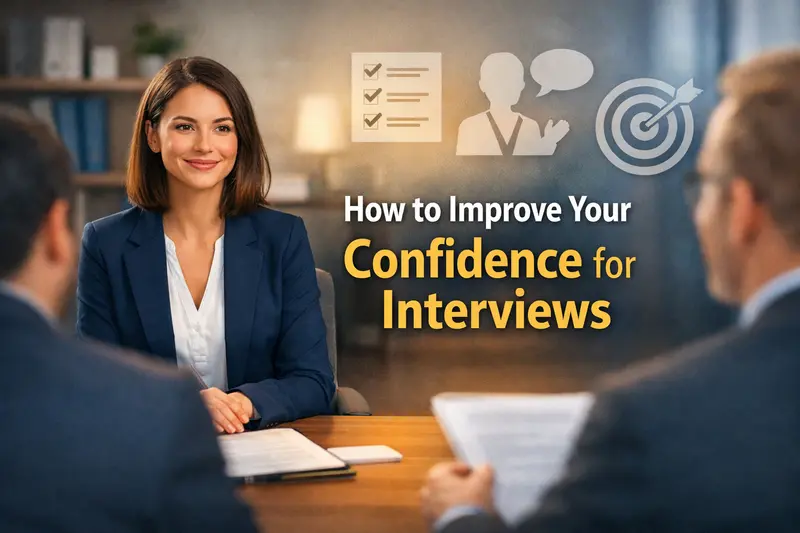
Interview confidence is one of those things people assume you either have or you don’t. In reality, it’s a skill that can be built, practiced, lost, and rebuilt again. This guide is for job seekers who feel capable on paper but struggle to show it in an interview setting.
That includes first-time job seekers, career changers, parents returning to work, people who’ve had a rough run of rejections, and even experienced professionals who suddenly feel shaky after a layoff. From what I have seen, confidence issues show up most when the pressure feels personal; “I really need this job” rather than when someone lacks ability.
I’ve watched friends freeze up in interviews for roles they were already doing well in elsewhere. I’ve also seen people with fewer qualifications walk out with offers because they communicated clearly and calmly. Confidence doesn’t mean arrogance or pretending to know everything. It means trusting yourself enough to speak honestly and handle uncertainty without panicking.
This article breaks down how interview confidence actually works in real life, why it disappears, and how to rebuild it step by step without forcing a fake personality.
What interview confidence actually means (and what it doesn’t)
Interview confidence is not about dominating the room, talking nonstop, or having rehearsed answers for every question. In real situations, interviewers usually respond better to candidates who are comfortable, thoughtful, and self-aware.
True interview confidence looks like:
- Being able to explain your experience without apologizing for it
- Pausing to think instead of rushing answers
- Admitting when you don’t know something, then explaining how you’d approach it
- Staying engaged even when a question catches you off guard
What it doesn’t look like:
- Memorizing scripts word-for-word
- Overselling yourself or exaggerating achievements
- Acting overly casual to hide nerves
- Trying to sound like someone else
People often don’t realize that interviewers expect some nervousness. In fact, I’ve sat in on hiring discussions where candidates were viewed more favorably because they showed they cared, as long as nerves didn’t derail communication.
Why confidence drops during interviews
Understanding why confidence disappears helps you fix it without blaming yourself.
1. Pressure and stakes
When income, stability, or career direction is on the line, your brain shifts into threat mode. This can cause shallow breathing, mental blanks, or rambling answers. I’ve watched a buddy ace practice interviews at home and then stumble the moment the real call started; not because he forgot anything, but because the stakes suddenly felt real.
2. Past rejections
Multiple rejections can quietly erode confidence, even when feedback is vague or nonexistent. Each interview starts to feel like another test you’re likely to fail.
3. Comparison
Scrolling through job descriptions asking for “rockstars” and “unicorns” can make even strong candidates feel underqualified. Confidence drops when you focus on imagined competition instead of your actual fit.
4. Lack of preparation in the right areas
Many people prepare facts but not delivery. Knowing your resume isn’t the same as being able to explain it calmly under pressure.

What interviews feel like in real life
In real interviews, things are rarely smooth and polished. Interviewers lose their train of thought. Technology fails. Questions come out awkwardly. Sometimes the interviewer is clearly tired or distracted.
Confidence isn’t about perfection — it’s about recovering smoothly.
I once watched a family member completely misinterpret a question in an interview, realize it halfway through, stop, laugh lightly, and correct themselves. Instead of hurting them, it actually improved the interviewer’s perception because it showed composure and honesty.
Confidence shows most in how you handle:
- Unexpected questions
- Minor mistakes
- Silence
- Clarifying misunderstandings
Core skills that directly affect interview confidence
Must-have skills
- Self-awareness – knowing your strengths, limits, and learning style
- Clear communication – explaining ideas simply without overthinking
- Emotional regulation – calming yourself when nerves spike
- Preparation discipline – practicing without memorizing scripts
Nice-to-have skills
- Storytelling ability
- Light humor when appropriate
- Industry vocabulary familiarity
- Experience with video or panel interviews
Confidence grows fastest when you strengthen the must-haves first.
How beginners can build confidence step by step
Step 1: Reframe what the interview is
An interview is not an interrogation. It’s a two-way evaluation. You are assessing whether the role, manager, and company fit you as well.
This mental shift alone reduces anxiety more than most people expect.
Step 2: Prepare talking points, not scripts
Instead of memorizing answers, prepare:
- 3–5 work examples
- Key skills you want to highlight
- One challenge you overcame
- One mistake you learned from
Practice explaining these in different ways. This builds flexibility and prevents panic when questions are phrased differently.
Step 3: Practice out loud
Silent preparation doesn’t build confidence. Speaking does.
I’ve seen people improve dramatically after just two mock interviews because hearing your own voice normalizes the experience.
Step 4: Simulate pressure
Practice with:
- A timer
- Someone interrupting you
- Video on if it’s a virtual interview
Confidence under pressure comes from exposure, not reassurance.
Body language and presence that support confidence

Nonverbal signals affect how confident you feel as much as how confident you appear.
Focus on:
- Sitting upright but relaxed
- Keeping your feet grounded
- Making natural eye contact
- Slowing your breathing before answering
Small adjustments here often reduce internal anxiety. One friend of mine struggled badly with interview nerves until they learned to consciously slow their breathing before speaking. The difference was noticeable within weeks.
Common mistakes that quietly destroy confidence

- Over-preparing answers until they sound robotic
- Apologizing for experience gaps unnecessarily
- Rushing responses to fill silence
- Trying to impress instead of connect
- Assuming rejection before it happens
One mistake I see often is candidates talking themselves out of roles during the interview by highlighting weaknesses the interviewer never asked about.
Realistic expectations about confidence
You will probably:
- Feel nervous before most interviews
- Have moments you wish you answered better
- Improve gradually, not instantly
Confidence is not the absence of nerves. It’s the ability to function with them.
Even highly experienced professionals feel anxious when roles matter. The difference is they’ve learned not to interpret nerves as failure.
Practical, experience-based tips that actually help
- Arrive early or log in early to avoid rushed energy
- Bring water — dry mouth increases anxiety
- Pause before answering; silence is okay
- Use phrases like “Let me think for a moment”
- End answers cleanly instead of trailing off
I’ve seen candidates turn interviews around simply by slowing down. Speed often reads as nervousness, while calm pacing reads as confidence — even when the content is the same.
Frequently Asked Questions
How can I be confident in interviews if I’m naturally shy?
Being shy doesn’t mean you can’t be confident. Many strong interview performers are introverts. Confidence comes from clarity, not volume. Focus on preparing thoughtful examples and allowing yourself pauses. Interviewers often appreciate measured, reflective answers. Practice speaking out loud beforehand to reduce anxiety, and don’t try to mimic extroverted styles that feel unnatural. Authentic calm is more persuasive than forced enthusiasm.
What if my confidence drops after multiple rejections?
Rejections affect confidence even when they aren’t about performance. The key is separating outcome from ability. Review what you can control; preparation, clarity, examples; and avoid assuming rejection equals failure. Take short breaks if needed, but don’t let gaps turn into avoidance. Confidence rebuilds through continued exposure, not waiting until you “feel ready.”
Can confidence really be improved, or is it personality-based?
Confidence is largely situational. Someone confident in meetings may struggle in interviews and vice versa. Interview confidence improves through preparation, repetition, and reflection. Personality influences style, not capability. I’ve watched people who once froze in interviews become calm, compelling candidates simply by changing how they prepared and practiced.
How do I stop my mind from going blank?
Blank moments usually come from pressure, not lack of knowledge. When this happens, pause, breathe, and restate the question. This buys time and refocuses your thoughts. Practicing flexible talking points instead of memorized answers also reduces this issue significantly.
Does confidence matter more than skills in interviews?
Both matter, but confidence helps interviewers see your skills. A confident explanation clarifies value. A nervous explanation can obscure it. Confidence doesn’t replace competence, but it allows competence to come through clearly.
Honest conclusion…..
Interview confidence isn’t something you suddenly “get.” It’s something you build through preparation, self-trust, and repeated exposure to uncomfortable moments. Nerves don’t mean you’re failing; they mean you care.
From what I’ve seen over the years, the most confident candidates aren’t the loudest or flashiest. They’re the ones who understand their own story, communicate it calmly, and recover gracefully when things don’t go perfectly.
If interviews currently feel intimidating, that doesn’t mean you’re not ready. It means you’re human. Confidence grows when you keep showing up, learning, and adjusting; one interview at a time.