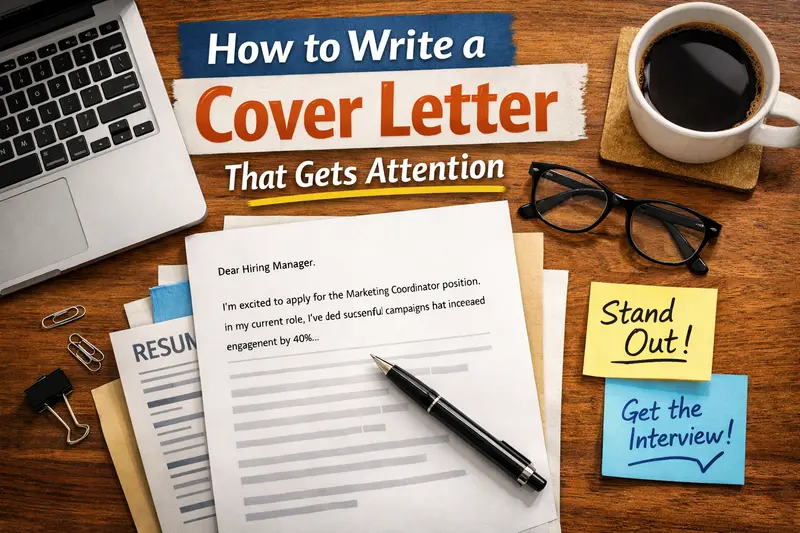

If you’ve ever stared at a blank document wondering how on earth to start a cover letter, you’re not alone. I’ve watched friends spend more time stressing over the cover letter than the resume itself, only to end up with something stiff, generic, and painfully forgettable. And honestly, that’s the real problem; most cover letters don’t fail because the applicant is unqualified. They fail because they sound like everyone else.
This guide is for job seekers who want their cover letter to actually get read. Whether you’re a recent graduate, someone changing careers, or a professional who hasn’t applied for a job in years, the goal is the same: to sound like a real person with something useful to offer, not a template trying to impress.
A good cover letter doesn’t repeat your resume. It adds context, shows judgment, and answers the quiet question hiring managers are always asking: Why should I care about this person? Let’s walk through how to do that step by step, without fluff or outdated advice.
What Is a Cover Letter Really For?
On paper, a cover letter introduces your resume. In real life, it does something more important—it frames how your resume is interpreted.
From what I’ve seen, hiring managers use cover letters in three main ways:
- To filter out careless applicants
Typos, wrong company names, or rambling paragraphs are quick red flags. - To understand motivation and fit
Skills matter, but effort and intent matter too. - To spot strong communicators early
Especially for roles involving writing, client interaction, or leadership.
A cover letter isn’t about sounding impressive. It’s about sounding clear. One hiring manager I know once said, “I don’t need poetry. I need to know if you can think and communicate.” That stuck with me.
How Cover Letters Work in Real Hiring Situations
Here’s the reality many people don’t realize: not every cover letter gets read word for word.
In real hiring situations:
- Some are skimmed in under 30 seconds
- Some are read only if the resume looks promising
- Some are read closely because something caught attention early
That means your first paragraph matters more than anything else. I’ve seen solid candidates ignored simply because they opened with a vague line like, “I am writing to express my interest in the position.”
No one is ever impressed by that sentence. Not once.
The Structure of a Cover Letter That Gets Attention
A strong cover letter is usually three to four short paragraphs. Not an essay. Not a life story.
1. The Opening: Say Something Real
Skip the formal filler. Start with a clear, human reason for applying.
Instead of:
I am writing to apply for the position of Marketing Coordinator at your esteemed company.
Try:
I’m applying for the Marketing Coordinator role because I’ve spent the last two years building campaigns for small teams that needed results, not buzzwords.
That one sentence already tells the reader more.
People often worry this sounds “too casual.” In real situations, clarity beats formality every time.
2. The Middle: Connect Skills to the Job
This is where most people go wrong. They list skills without context.
A better approach:
- Pick one or two key requirements from the job posting
- Explain how you’ve actually used them
- Keep it specific
For example:
In my current role, I manage weekly email campaigns for a list of 40,000 subscribers. I handle copy, A/B testing, and performance tracking, which aligns closely with your focus on data-driven marketing.
I’ve watched a buddy rewrite his cover letter like this after months of no replies. Same resume. Suddenly, interviews started coming in.
3. The Closing: Make the Next Step Easy
The ending should feel confident, not desperate.
Avoid:
I hope you will consider my application.
Try:
I’d welcome the chance to talk about how my experience could support your team’s goals.
It signals interest without begging.
Must-Have Skills for Writing a Strong Cover Letter
You don’t need to be a writer, but you do need a few basics.
Must-Have Skills
- Clear, simple writing
- Ability to summarize experience
- Attention to detail
- Understanding of the role you’re applying for
Nice-to-Have Skills
- Storytelling
- Industry knowledge
- Tone matching (formal vs casual)
- Confidence without exaggeration
People often think confidence means bragging. It doesn’t. It means stating facts without apologizing for them.
How Beginners Usually Start (Step-by-Step)
If cover letters feel overwhelming, this path helps.
Step 1: Read the Job Description Carefully
Highlight:
- Required skills
- Repeated phrases
- What problems the role solves
Step 2: Write a Rough Draft Without Editing
Don’t worry about perfection. Just answer:
- Why this job?
- Why you?
Step 3: Cut It Down
Remove:
- Generic phrases
- Anything that repeats your resume
- Long sentences that don’t add meaning
Step 4: Personalize the First Paragraph
This is where attention is earned.
Step 5: Proofread Like a Hiring Manager
Read it out loud. Awkward sentences show themselves fast.
I’ve seen people send out 20 applications with the same cover letter and get nowhere. Then they personalize just the first paragraph and suddenly things change.
Common Cover Letter Mistakes That Hurt Your Chances
Some mistakes come up again and again.
Being Too Generic
If your letter could be sent to any company, it will impress none.
Repeating the Resume
Hiring managers already have your resume. They want context, not duplication.
Trying to Sound “Professional”
Overly formal language often sounds stiff and unclear.
Making It All About You
Good cover letters balance what you want with what the employer needs.
Ignoring Instructions
If the job posting asks for something specific and you skip it, that’s often the end.
Realistic Expectations: What a Cover Letter Can and Can’t Do
A great cover letter won’t guarantee a job. It can:
- Increase your chances of getting an interview
- Help hiring managers remember you
- Position you as thoughtful and intentional
It won’t:
- Fix a completely mismatched resume
- Make up for missing required qualifications
- Overcome mass automated rejections on its own
Think of the cover letter as a multiplier. If your resume is solid, it helps. If your resume is weak, it won’t save it.
Practical Tips From Real Experience
Here are lessons I’ve picked up watching people apply, fail, adjust, and succeed.
- Shorter is usually better: One page is the absolute max.
- Write for one person, not a company: Someone is reading this.
- Use the company’s language, not buzzwords: Mirror tone, not jargon.
- Save versions: Track which letters get responses.
- Don’t over-edit: Polished is good. Sterile is not.
One friend rewrote his cover letter ten times and made it worse each time. The version that worked was clear, honest, and surprisingly simple.
Frequently Asked Questions
Do employers still read cover letters?
Yes, but selectively. Many hiring managers skim first and read closely only if something stands out. That’s why a strong opening matters. In competitive roles, a good cover letter can be the difference between two similar resumes. In roles that value communication, it’s often weighted more heavily than applicants expect.
How long should a cover letter be?
Ideally 250 to 400 words. Long enough to show intent and clarity, short enough to respect time. If it spills onto a second page, it’s too long. Hiring managers appreciate concise communication more than exhaustive detail.
Should I use the same cover letter for every job?
No, but you don’t need to rewrite everything. A strong base letter is fine, but the opening paragraph and key examples should be customized. Even small changes signal effort and awareness.
Is it okay to explain career changes or gaps?
Yes, briefly and confidently. A cover letter is the best place to add context without over-explaining. Focus on what you bring now, not what you’re leaving behind.
What if I don’t know the hiring manager’s name?
Use a neutral greeting like “Dear Hiring Manager.” Avoid outdated phrases like “To Whom It May Concern.” It’s not a dealbreaker, but getting the name when possible is always better.
Write Like a Human, Not a Template………
A cover letter that gets attention doesn’t try to impress everyone. It speaks clearly to the right reader. It shows thought, effort, and relevance without pretending to be perfect.
From what I’ve seen, the people who succeed aren’t always the most qualified. They’re the ones who take time to communicate well. If you do that, your cover letter won’t just get read—it’ll be remembered. Read this article too Common job application mistakes and how to avoid them.